
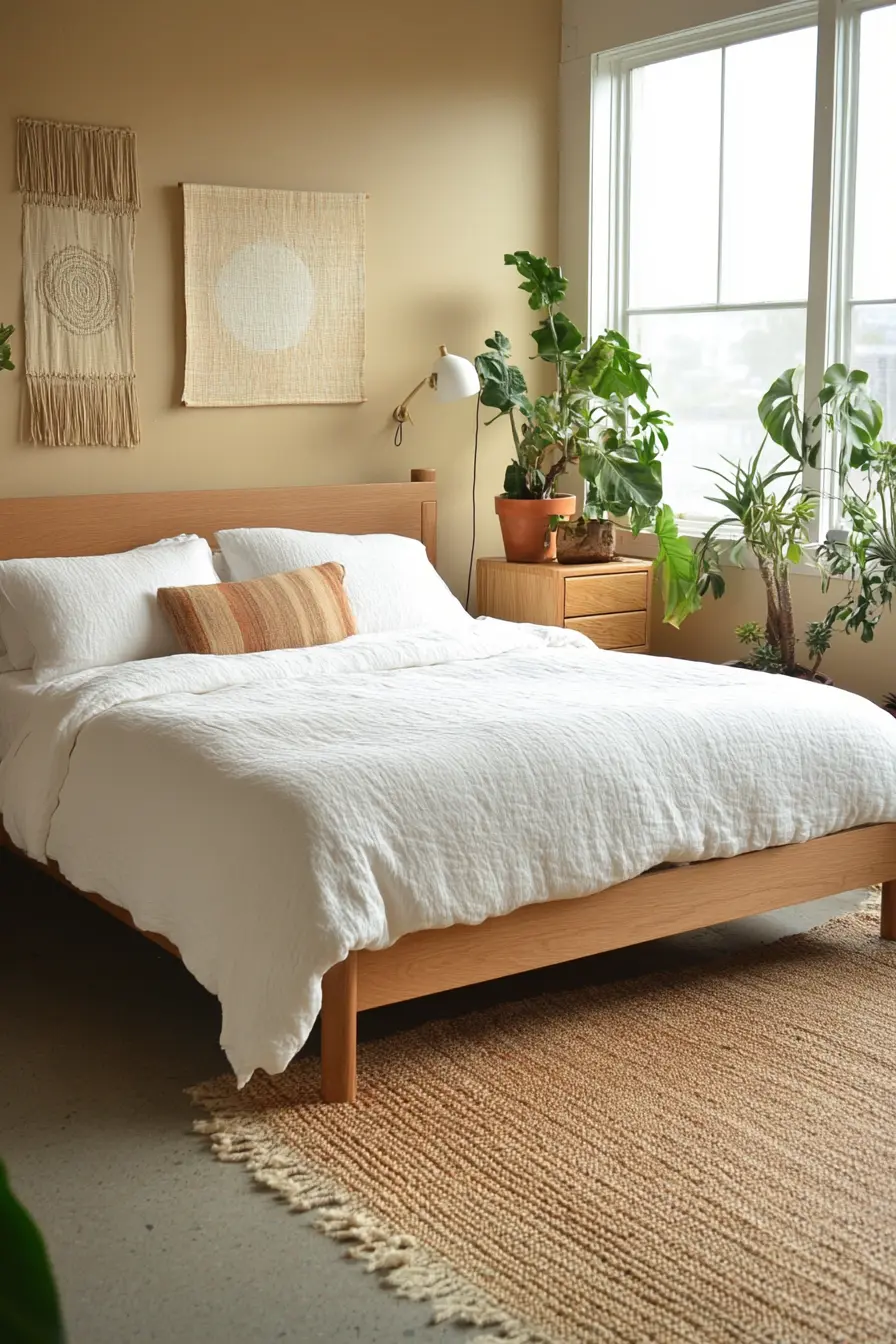
My abuelita, God rest her soul, always said, “Less is more, mijo.” I didn’t understand until I saw her perfectly curated bedroom. It had only what she needed, but felt immensely calming. Have you noticed the chaos of modern life creeping into our sanctuaries? We pile things, stress rises, and sleep becomes elusive. That’s where minimalist bedroom design comes in! A minimalist approach creates a calming, functional, and beautiful space. Let’s explore how we can transform your bedroom into a peaceful retreat.
Why Minimalist Bedroom Design Matters for Your Bedroom
Minimalism isn’t just about aesthetics; it’s a lifestyle that emphasizes intention and simplicity. It impacts our mood and overall wellbeing. Think of your bedroom as a sanctuary, a place for rest and rejuvenation. Moreover, a well-designed minimalist space reduces stress and promotes better sleep.
1. Impact on Mood & Wellbeing
Clutter leads to stress and anxiety. Too much stuff visually overwhelms you, competing for your attention. However, a minimalist bedroom alleviates this burden. A clean, uncluttered space allows the mind to relax. A study published in The Journal of Environmental Psychology showed that clutter negatively impacts mood and cognitive function [1]. Therefore, reducing clutter can increase feelings of calm and control.
2. Boosting Aesthetic Appeal
We often associate minimalism with stark white walls and cold spaces. However, this isn’t the whole story. It’s about creating a visually pleasing space using simple, elegant elements. Minimalist bedroom ideas can incorporate warm textures, natural materials, and carefully chosen art. Therefore, you can achieve a sophisticated and inviting aesthetic. Furthermore, the simplicity of the design highlights the inherent beauty of each piece.
3. Function Meets Comfort
Minimalism prioritizes function. Every item in the room should serve a purpose. But this doesn’t mean sacrificing comfort. Instead, it means choosing comfortable, high-quality pieces that you love. For instance, invest in a comfortable mattress and soft organic bedding materials. Moreover, consider storage solutions to keep clutter out of sight. Therefore, function and comfort can coexist beautifully in a minimalist bedroom.
Planning Your Minimalist Bedroom Design
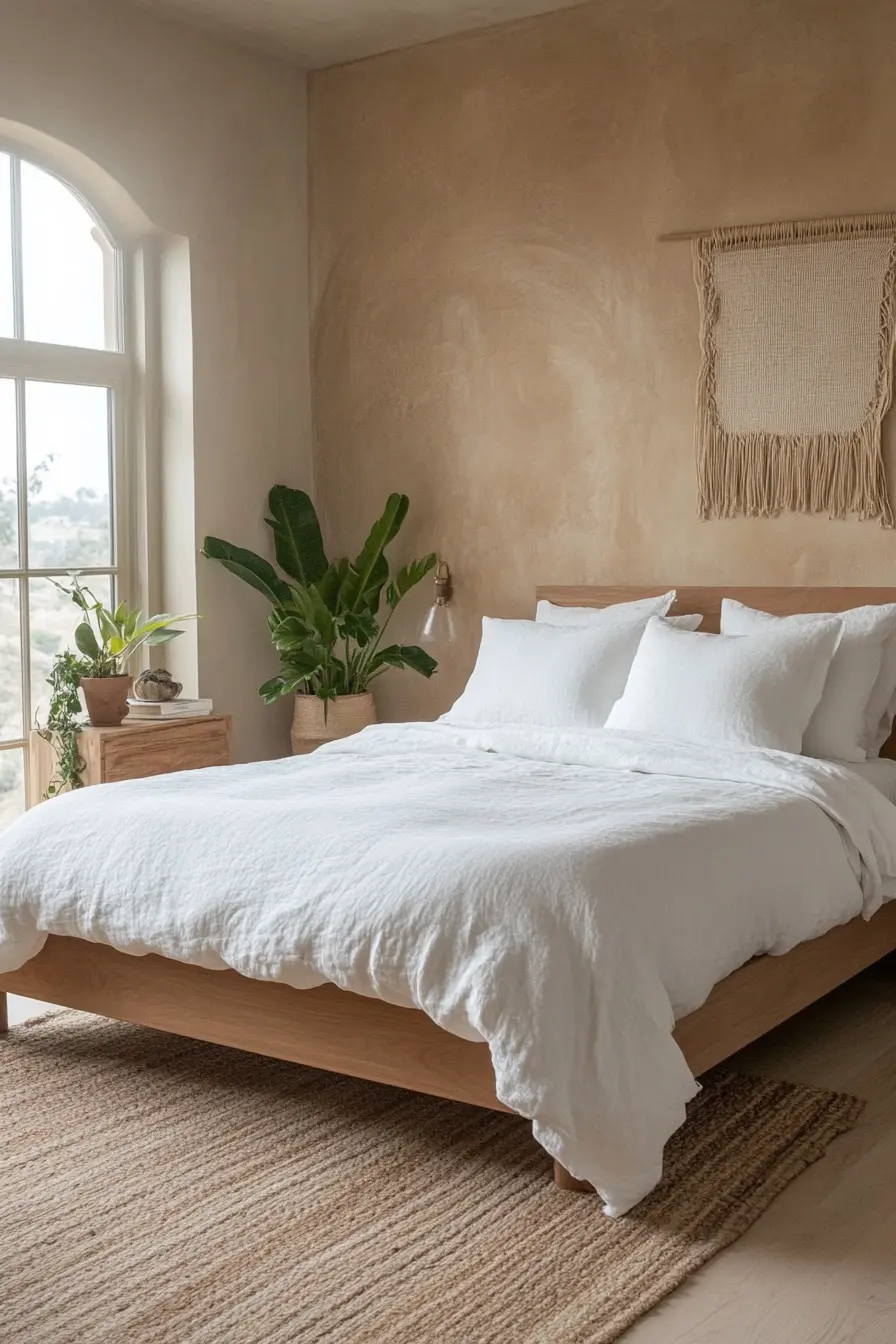
Before you start decluttering, planning is vital to a beautiful and functional space. It will help avoid unnecessary spending and ensure your bedroom reflects your personal style. Firstly, figure out your vision, then choose your colors.
1. Setting a Vision & Mood Board
What feeling do you want your bedroom to evoke? Calm? Serene? Cozy? Create a mood board with images, colors, and textures that inspire you. Pinterest and design magazines are great resources. Have you thought about what your ideal space looks like? This vision will guide your design choices. Therefore, a clear vision makes the process easier and more focused.
2. Choosing the Right Color Palette
Neutral color palette bedroom designs are very popular in minimalist design, but don’t feel completely bound to that trend. Consider soothing blues, greens, or earthy tones. Color psychology suggests that certain colors can promote relaxation and sleep [2]. However, avoid overwhelming bright colors that can be stimulating. Therefore, choose a palette that complements your vision. Furthermore, stick to a limited number of colors to maintain a sense of calm.
3. Budget & Resource Planning
Minimalism can be budget-friendly, especially if you already own some core pieces. However, prioritize investing in high-quality items that will last. Consider repurposing existing furniture or shopping second-hand for unique finds. Therefore, carefully plan your budget before you begin. Furthermore, consider where you will donate or sell unwanted items. Think about how to create a sustainable bedroom decor that’s not just eco-friendly but affordable.
Essential Elements of Minimalist Bedroom Design
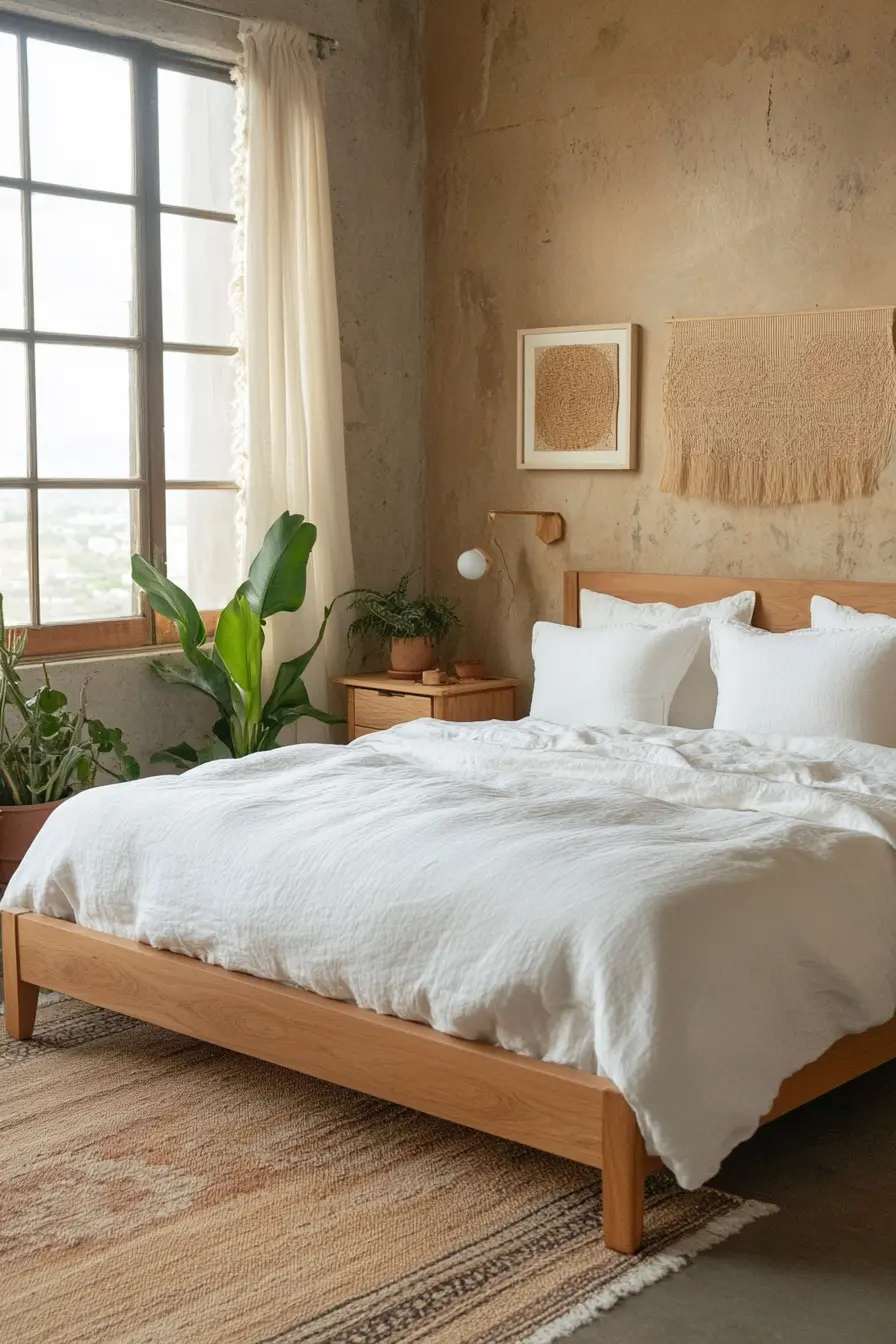
Creating that perfectly peaceful minimalist bedroom can come down to a few essential ingredients. Namely, let’s consider: how to choose your key furniture, what textiles bring comfort, and how to shape a calming atmosphere.
1. Furniture & Layout
Choose a few essential pieces of furniture, such as a bed, bedside table, and dresser. Select pieces with clean lines and a simple design. A bamboo bed frame ideas has both design and environmental benefits. Therefore, arrange the furniture to maximize space and flow. Moreover, avoid overcrowding the room. A simple, uncluttered layout promotes a sense of calm.
2. Textiles & Fabrics
Choose textiles that are soft, comfortable, and natural. Linen bedding ideas are perfect for a minimalist bedroom because they are both luxurious and breathable. Consider wool throws and cotton rugs to add warmth and texture. However, avoid overly elaborate patterns or embellishments. Therefore, natural textiles create a sense of comfort and ease.
3. Lighting & Ambience
Lighting is crucial for creating a calming atmosphere. Use natural light whenever possible. Supplement with soft, warm artificial light. Floor lamps and bedside lamps are excellent choices. Consider dimmer switches to adjust the lighting to your mood. Therefore, bedroom lighting for calm should be warm and inviting. Furthermore, avoid harsh overhead lighting.
Styling Tips & Tricks
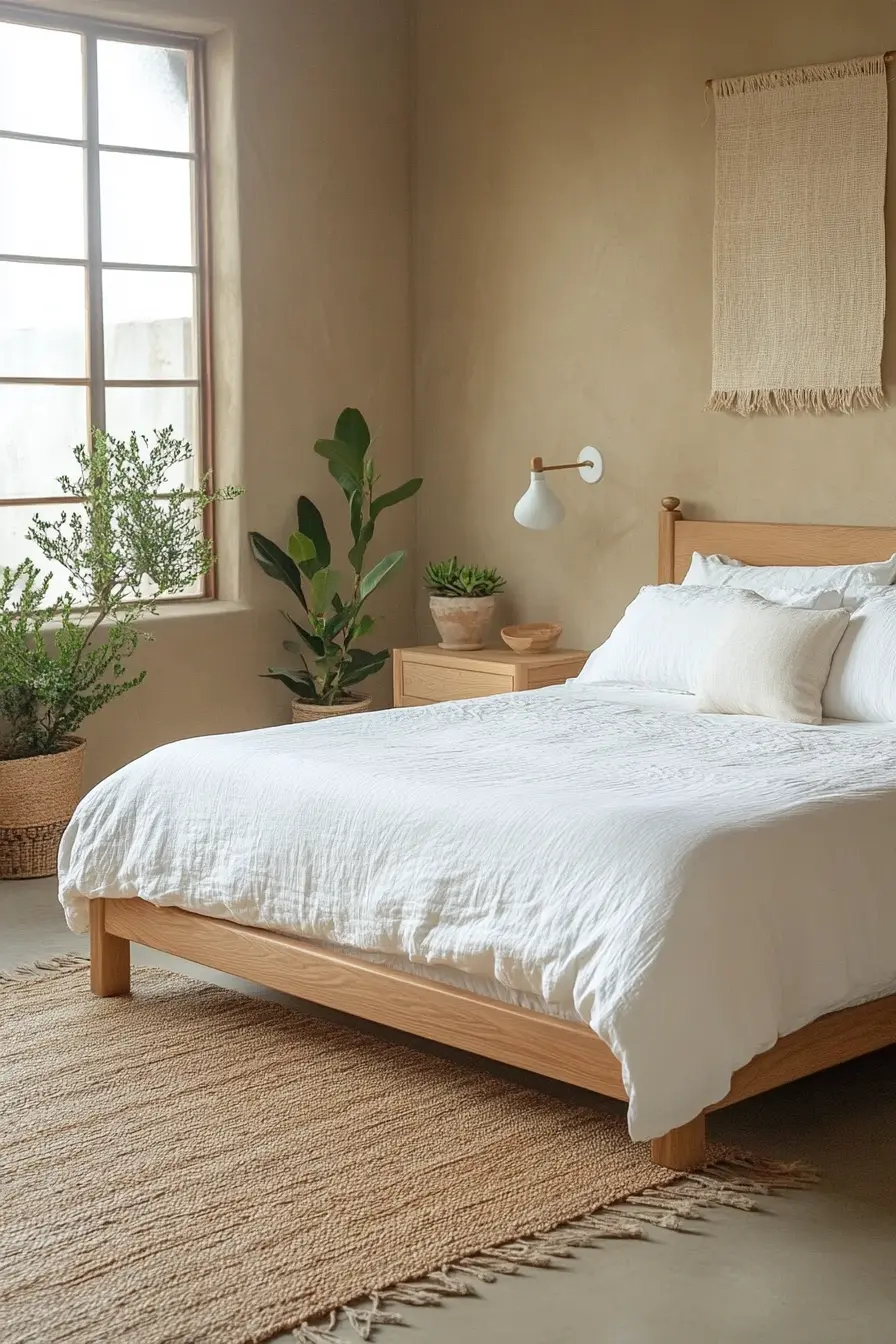
Once you have the key elements in place, it’s time to add personal touches. Texture can add interest while keeping things very simple.
1. Layering Textures
Layering textures adds depth and interest to a minimalist space. Combine smooth and rough textures, such as linen and wool. Think about layering rugs, blankets, and pillows. Have you considered adding a woven textiles decor to your bedroom wall? Therefore, layering textures adds visual interest without adding clutter.
2. Mixing Patterns & Colors
Although minimalism favors simplicity, you can still incorporate subtle patterns and colors. Choose patterns that are geometric or organic, and stick to a limited color palette. Consider a subtle stripe or a muted floral print. However, avoid overwhelming patterns that can detract from the sense of calm. Therefore, a few carefully chosen patterns can add personality to your minimalist bedroom.
3. Statement Pieces
A statement piece can be a focal point in your minimalist bedroom. Consider a piece of art, a unique mirror, or an interesting plant. Choose something that you love and that reflects your personal style. However, avoid adding too many statement pieces, as this can create clutter. Therefore, one well-chosen statement piece can add character and interest to the room.
Seasonal & Trend Variations
1. Spring & Summer Bedroom Refresh
In the spring and summer, lighten up your bedroom with brighter colors and lighter fabrics. Swap out heavy blankets for lightweight quilts. Bring in fresh flowers or greenery. Consider adding sheer curtains to let in more natural light. Therefore, a spring and summer refresh can make your bedroom feel fresh and airy.
2. Cozy Autumn Vibes
As the weather cools down, add warmer textures and colors to your bedroom. Layer heavier blankets and throws. Incorporate earthy toned bedroom inspiration with rich browns, oranges, and reds. Add candles or essential oil diffusers to create a cozy atmosphere. Therefore, a cozy autumn update can make your bedroom feel warm and inviting.
3. Winter Wonderland Retreat
In the winter, transform your bedroom into a cozy retreat. Add plush rugs and soft blankets. Use warm lighting and create a calming atmosphere. Consider adding a faux fur throw or a cozy sweater. Therefore, a winter wonderland retreat can make your bedroom feel like a snug sanctuary.
Mistakes to Avoid
It’s easy to get too caught up in the idea of minimalism and lose sight of its original goals, comfort and utility. Here’s how to avoid that.
A common mistake is equating minimalism with starkness and deprivation. It’s not about sacrificing comfort or personality. It’s about choosing things that you truly love and that serve a purpose. Avoid buying things just because they are “minimalist.” Instead, focus on quality, comfort, and personal style. Finally, don’t be afraid to add personal touches that make your bedroom feel like home. Another misstep is neglecting storage. Low-clutter bedroom tips begin with making sure everything has its place to prevent overflow on surfaces.
Inspiration Gallery
[Insert Image Gallery of Minimalist Bedroom Designs Here. Captions can be added here]
Quick Shopping Guide
- Bed Frame: Look for simple, platform beds or bamboo bed frame ideas.
- Bedding: Invest in organic bedding materials like linen, cotton, or bamboo.
- Lighting: Choose soft, warm bedside lamps or floor lamps with dimmer switches.
- Storage: Opt for dressers, nightstands, and under-bed storage with clean lines.
- Decor: Select a few carefully chosen pieces of art, plants, or woven textiles decor.
- Paint: Choose neutral color palette bedroom paint in shades of white, grey, or beige.
FAQs
Q: How do I start decluttering my bedroom?
A: Start by removing items you don’t use or love. Then, organize what’s left.
Q: What are the best colors for a minimalist bedroom?
A: Neutral color palette bedroom choices like white, gray, beige, and muted earthy tones are ideal.
Q: How can I make my minimalist bedroom feel cozy?
A: Layer textures with soft blankets, rugs, and pillows. Add warm lighting and personal touches.
Q: How vital is natural materials for bedroom design?
A: Using organic materials will ensure an attractive, non-toxic sleep environment in line with minimalist priorities.
Q: How do I prevent my minimalist bedroom from feeling sterile?
A: Introduce organic textures and carefully chosen colors. Incorporate wood accents bedroom features like exposed beams to add warmth.
Q: How can I make a small bedroom feel bigger?
A: Use light colors, mirrors, and minimal furnishings. Maximize vertical space with shelving.
Q: What are key small bedroom minimalist solutions?
A: Install space-saving storage boxes, fold-away wall beds, and a wall-mounted desk for space saving.
Q: How do I incorporate personal touches into a minimalist bedroom?
A: Choose a few carefully chosen items that you truly love and that reflect your personal style, such as a favorite piece of art or a meaningful photograph.
Minimalist bedroom design isn’t just about decluttering your space; it’s about decluttering your mind. By focusing on simplicity, functionality, and comfort, you can create a sanctuary that promotes relaxation and wellbeing. Remember to personalize your space with textures, colors, and statement pieces that reflect your style. So, begin today and craft your own decluttered sleep sanctuary!
Which tip shared inspires you to start designing your own minimalist bedroom?