
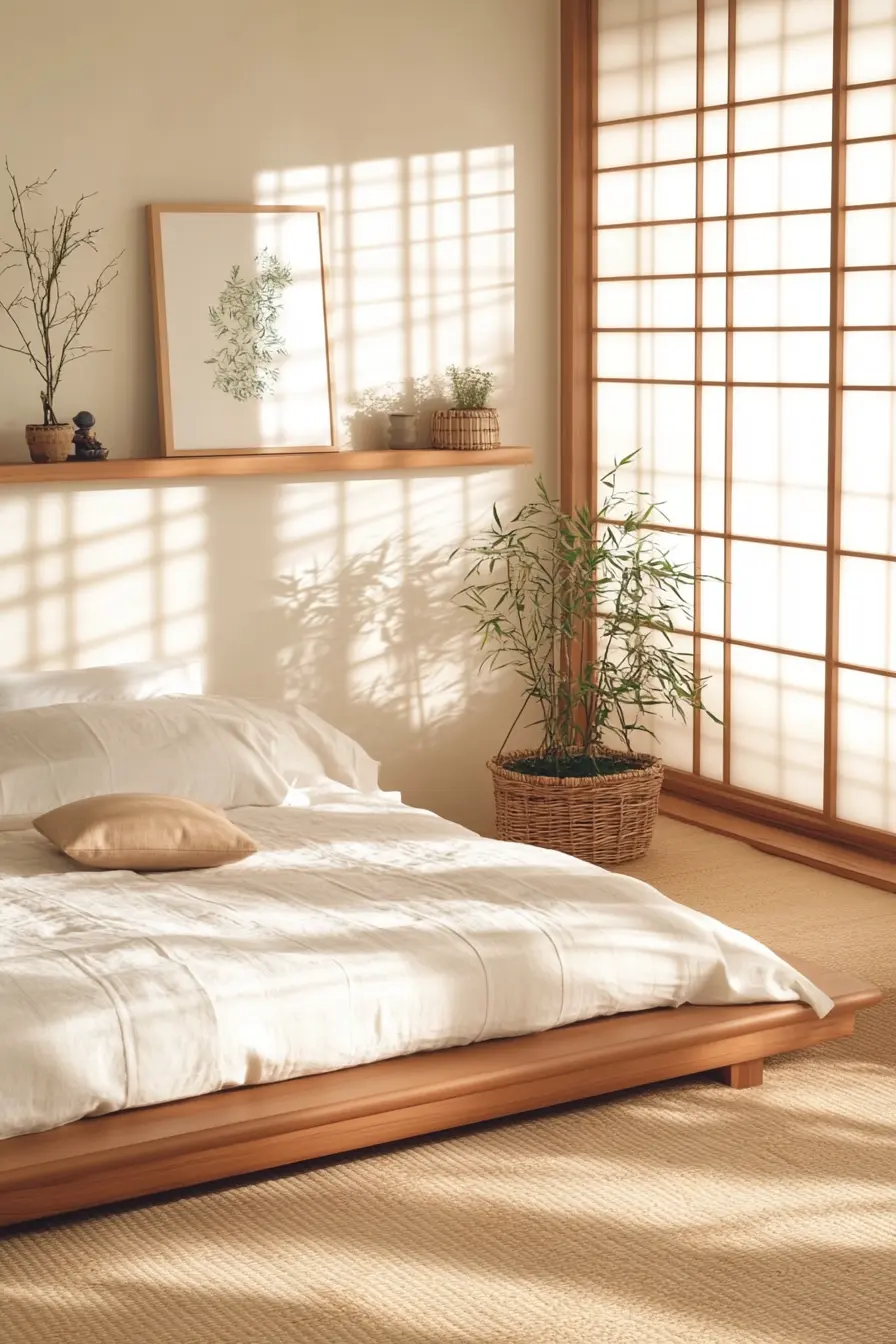
Let’s craft your perfect Japanese minimalist bedroom!
Introduction
I recall my Mexican neighbor, Mrs. Rodriguez, always adding vibrant colors and intricate patterns to her home. One day, she curiously asked me about my own penchant for bare walls and simple spaces. I explained that my bedroom was my sanctuary, a Japanese minimalist bedroom where I could rest after a long day. Embracing this style creates a calming atmosphere, turning your room into a haven of peace. Let’s explore how you can achieve this tranquil transformation. This article outlines the elements of Japanese inspired interiors.
Why Japanese minimalist bedroom Matters for Your Bedroom
1. Impact on Mood & Wellbeing
The zen living philosophy emphasizes simplicity and mindfulness. Moreover, a clutter free space reduces stress and promotes relaxation. Have you noticed how much easier it is to breathe in a clean room? I find that a peaceful sleep environment is directly correlated with a minimalist design. This style encourages you to declutter your mind alongside your space. Furthermore, studies show uncluttered space reduces fatigue and tension.
2. Boosting Aesthetic Appeal
A Japanese minimalist bedroom is more than just functional. It’s also visually pleasing! Simple doesn’t mean boring. In fact, the careful selection of each item makes a bigger impact. Clean lines and natural materials create an elegant and timeless look. The focus is on quality over quantity, which adds a touch of sophistication to a tranquil home decor.
3. Function Meets Comfort
This style is all about balancing practicality with comfort. Each item serves a purpose, and excess is eliminated. Tatami mats are comfortable, and furniture are functional and made of wood. The bed becomes a place of true rest. Therefore, a well designed functional minimalism, creates a peaceful retreat dedicated to wellness and rest.
Planning Your Japanese minimalist bedroom
1. Setting a Vision & Mood Board
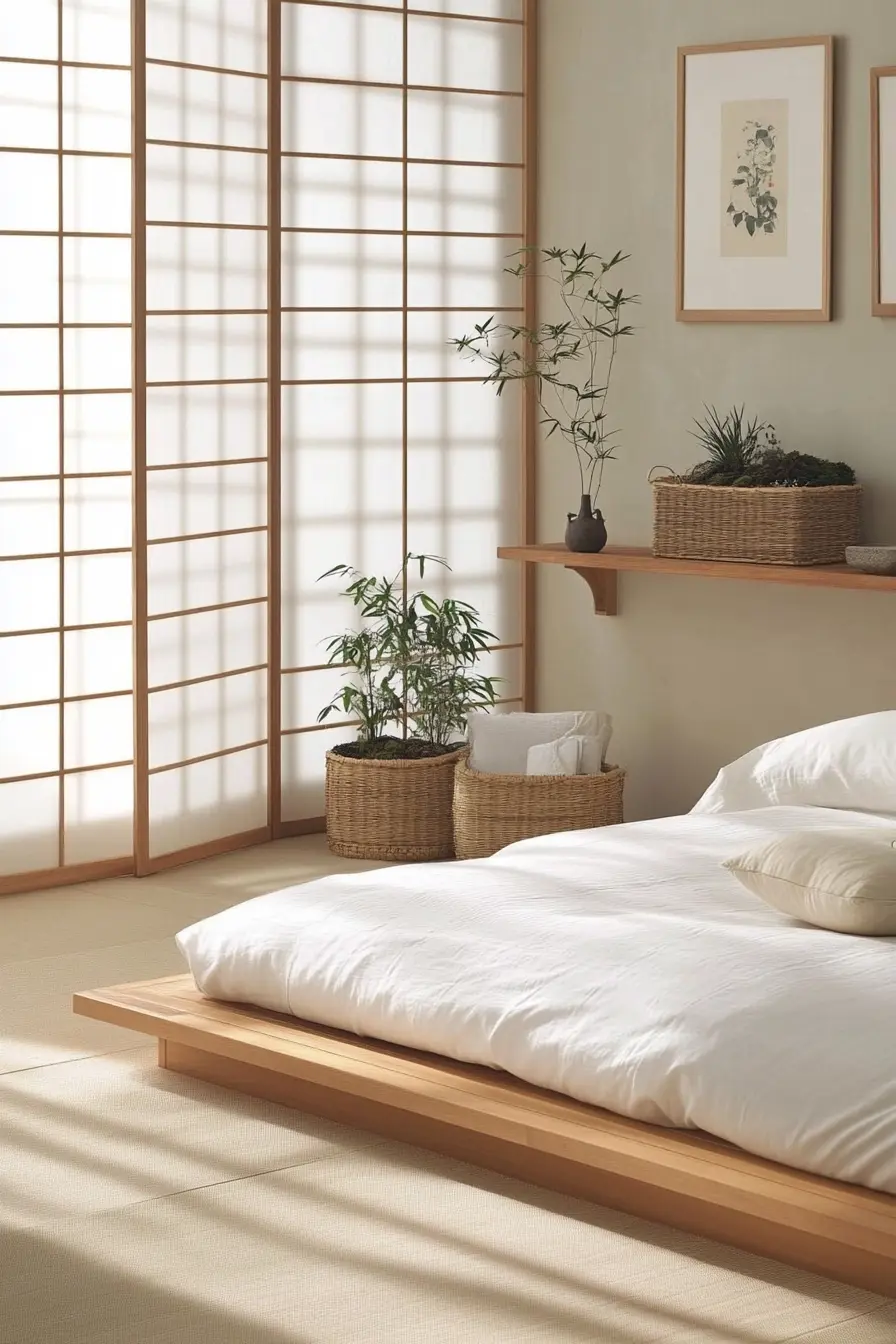
Before you start buying things, it’s important to establish your vision. What kind of atmosphere do you want to achieve? I suggest you create a mood board with images of Japanese interior design that inspire you. Take note of color schemes, furniture styles, and the overall feeling of the spaces you admire. Then refine the design to make it all your own.
2. Choosing the Right Color Palette
The color palette is crucial for setting the mood. Therefore, stick to a neutral color palette, such as soft grays, creams, and earthy tones. These colors promote calmness and serenity. I find that adding a touch of nature-inspired colors enhances the effect. Also consider the effects on light.
3. Budget & Resource Planning
Creating a Japanese minimalist bedroom doesn’t have to break the bank. First, assess what you already have and what you can repurpose. Secondly consider shopping at more budget friendly places such as thrift stores. Finally, you can find minimalist decor ideas on websites. Moreover, set a budget and stick to it, prioritizing essential furniture and décor items.
Essential Elements of Japanese minimalist bedroom
1. Furniture & Layout
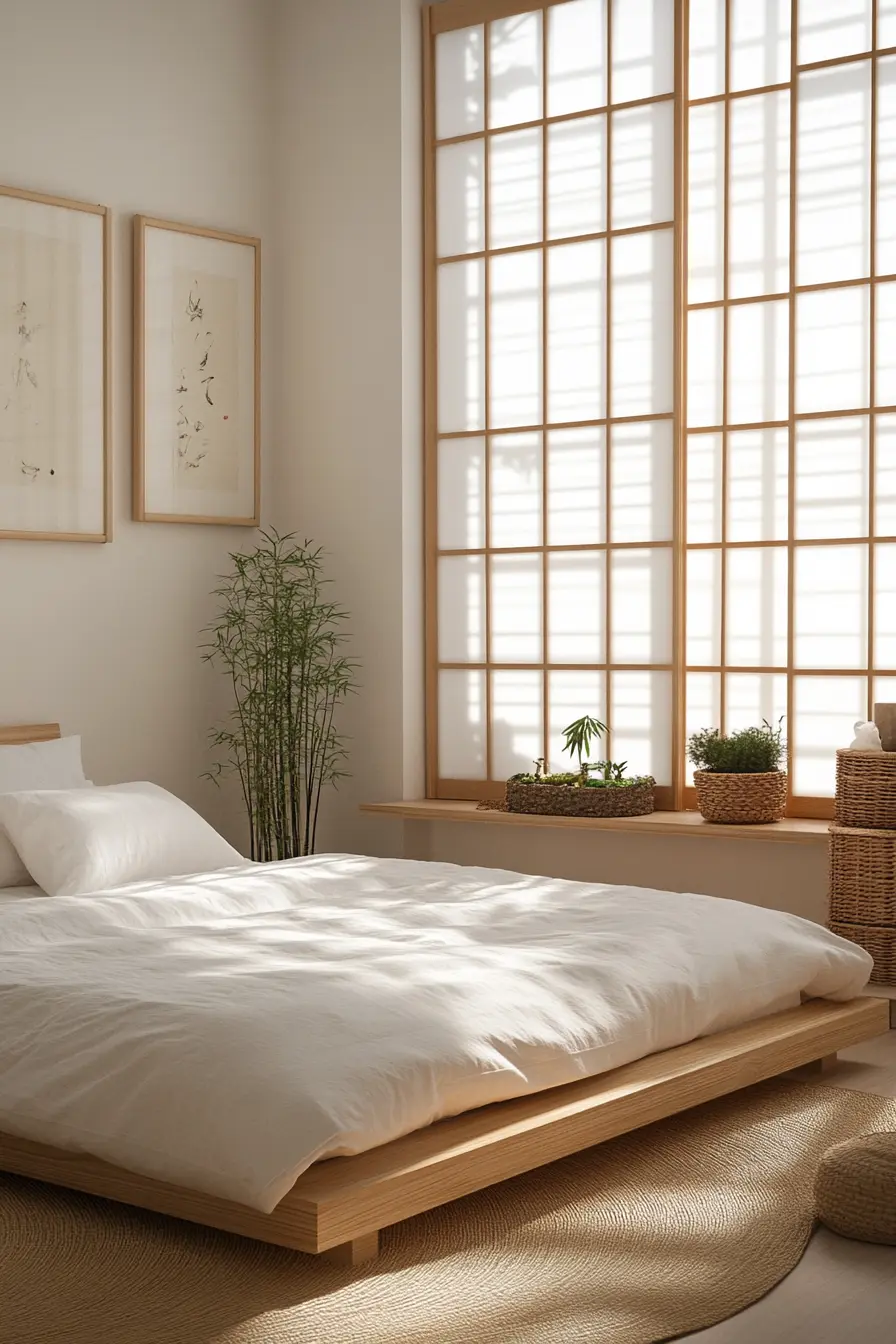
Simple, low profile furniture is key. For instance, a platform bed or a tatami mat are excellent choices. Therefore, keep the layout open and uncluttered, allowing for easy flow. I suggest opting for furniture with clean lines and minimal ornamentation. Every piece should serve a purpose.
2. Textiles & Fabrics
Choose natural materials bedroom such as cotton, linen, or bamboo for bedding, curtains, and rugs. These materials add texture and warmth to the space. Furthermore, consider incorporating a shoji screen dividers to provide privacy while maintaining a light and airy feel. I suggest muted patterns or solid colors to maintain the minimalist aesthetic.
3. Lighting & Ambience
Natural light bedroom is essential for a serene bedroom retreat. Maximize it by using sheer curtains or leaving windows uncovered. Furthermore, add soft, indirect lighting sources; paper lanterns or dimmable lamps. Scented candles or essential oil diffusers can also enhance the calming atmosphere. Therefore, the soft aroma of lavender or sandalwood in your bedroom sanctuary ideas can contribute to a relaxing experience.
Styling Tips & Tricks
1. Layering Textures
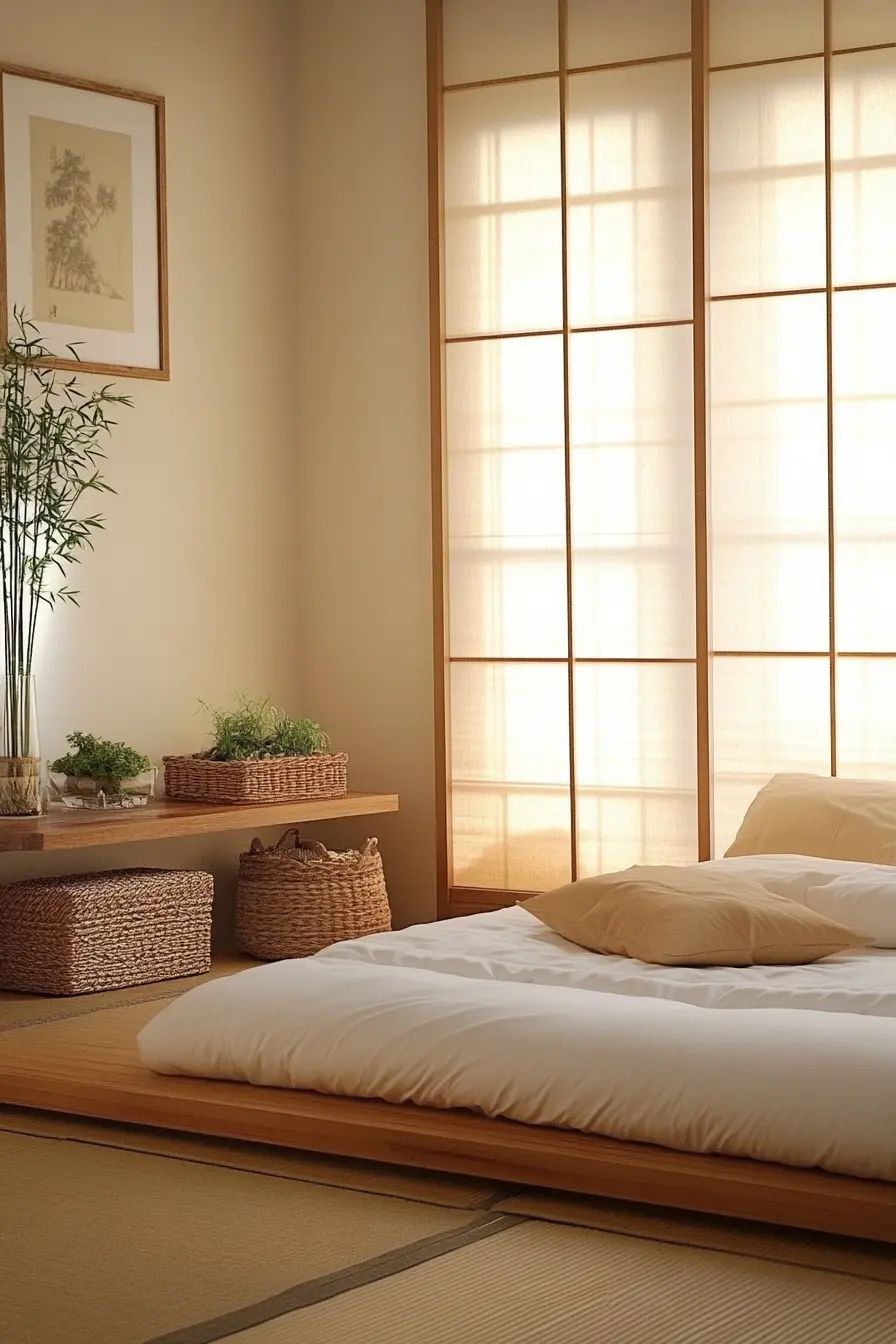
While the color palette should be simple, you can create depth by layering textures. For instance, consider a chunky knit blanket on top of a smooth linen duvet cover. I find that mixing different textures adds visual interest without overwhelming the space. This adds to the design of the Japanese minimalist bedroom.
2. Mixing Patterns & Colors
Although minimalism favors simplicity, you can introduce subtle patterns and colors. For example, a geometric rug or a calming bedroom colors in shades of green can introduce a unique accent. Just remember to use them sparingly to avoid cluttering the space.
3. Statement Pieces
A few well chosen statement pieces can add personality to your Japanese minimalist bedroom. I would suggest a carefully arranged ikebana flower display or a piece of calligraphy art. These items should be meaningful and reflect your personal style.
Seasonal & Trend Variations
1. Spring & Summer Bedroom Refresh
In the spring and summer, lighten up your space. Swap out heavy blankets for lighter ones. I love incorporating fresh flowers or plants. Furthermore, consider using brighter, airier colors.
2. Cozy Autumn Vibes
As the weather cools down, add warmer textures and colors. Thicker blankets, knitted throws, and earthy tones can create a cozy atmosphere. I find adding candles is a great option.
3. Winter Wonderland Retreat
In the winter, focus on creating a warm and inviting retreat. Consider using warmer lighting and heavier fabrics. Adding a humidifier can also help to combat dry air in the winter.
Mistakes to Avoid
One common mistake is overdecorating. Remember, less is more. Furthermore, avoid cluttering surfaces with unnecessary items. Another mistake is neglecting functionality. Therefore, every item should serve a purpose. Prioritize quality over quantity.
Inspiration Gallery
[Imagine a gallery here, filled with images of serene, minimalist bedrooms featuring tatami mats, shoji screens, calming colors, and uncluttered spaces.]
Quick Shopping Guide
- Platform bed frames
- Tatami mats
- Linen bedding
- Shoji screen dividers
- Paper lanterns
- Natural materials bedroom décor
FAQs
Q: How do I declutter my space?
A: Start with one area at a time and remove anything you don’t need or use.
Q: What are the best plants for a Japanese minimalist bedroom?
A: Bamboo, orchids, and succulents are all great choices.
Q: How do I incorporate more natural light?
A: Use sheer curtains and mirrors to reflect light around the room.
Q: What are some good storage solutions?
A: Storage boxes, baskets, and furniture with built in storage are all effective options.
Q: How do I create a relaxing atmosphere?
A: Use soft lighting, calming scents, and comfortable textures.
Conclusion
Creating a Japanese minimalist bedroom is about creating a peaceful space. Simplicity in design, mindful choices, and a clutter free environment contribute to your serene bedroom retreat. Embrace the zen living philosophy and make your bedroom a sanctuary. This style will offer you a peaceful and serene refuge from everyday stresses.
What design choice resonated most with you; let me know in the comments below!